

19th-Apr-22, 07:20 AM
When Mike came up with the fabulous idea of Covid-era proxy racing in the UK, his vision was of using some of the many permanent, semi-permanent and specially-built home tracks around the country. Any UK-based proxy racing using home tracks is likely to feature at least some 'classic' track - after all, it was the mainstay of our hobby for 40+ years. It would be a big step away from Mike's vision if we only ran only club-spec cars on perfect wood surfaces (if there is such a thing...).
When classic track is used in a proxy, the only warning is usually a reminder of the shallow slot depth - and it's up to the entrants to figure out what they need to do. Most brands' cars are 100% compatible out of the box. I think Graham has been hugely helpful in laying out chapter and verse on what is needed and recommending an NSR guide. If any extra clarification is needed, I hope this helps...
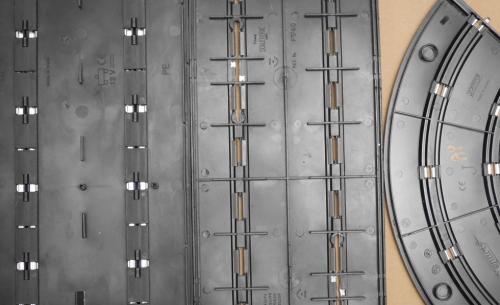
From left to right - Ninco, Scalextric 'classic' and Scalextric Sport. You can see the newer designs have a more-or-less enclosed slot, so any guide slides along the bottom of the slot. The older classic track is open at the bottom, with strips of plastic across the gaps. On the flat, a too-deep guide will catch, but a small notch should help it ride over the obstacles in the slot. A guide that fills the slot will be fine also. However, if there is any incline, the problems start...
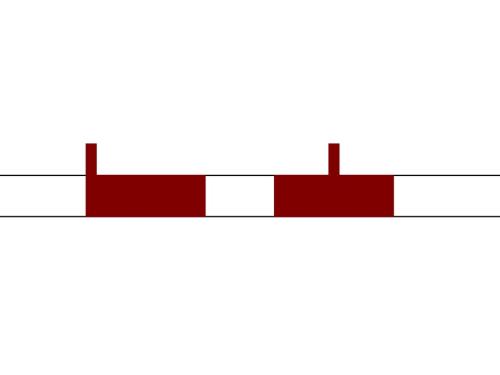
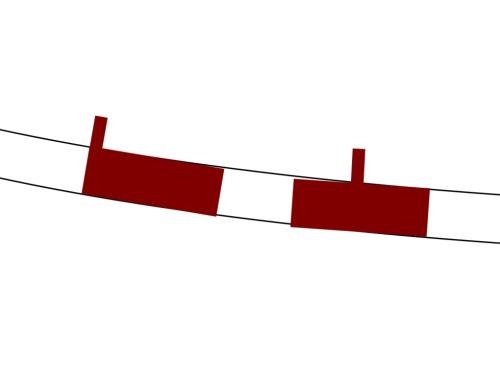
A guide with 5.5mm or 6mm hanging straight down from the pivot (which rest on top of the rails) will be fine. Any guide with material in front of the pivot (ie not resting on top of the rails) will risk poking through the bottom of the slot and catch the strips across the slot. The steeper the incline, the bigger the risk. There are some big inclines on the Devil's Dyke hillclimb.
Over the four proxy races on Devil's Dyke, there have been a few cars with incompatible guides. However, the vast majority have worked perfectly well and have been a joy to race up the hill...
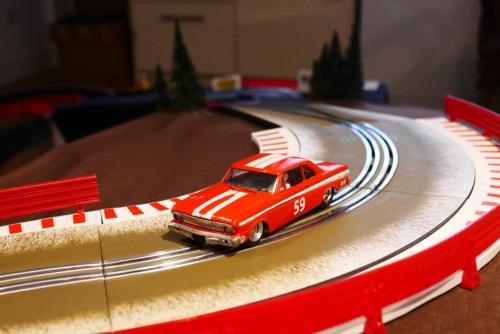
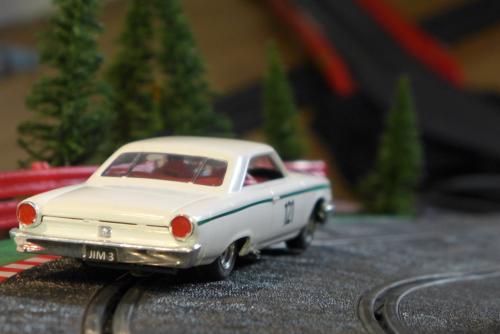
I look forward to welcoming cars back again in the future. However, if you're thinking of entering: be wise with your guide.
When classic track is used in a proxy, the only warning is usually a reminder of the shallow slot depth - and it's up to the entrants to figure out what they need to do. Most brands' cars are 100% compatible out of the box. I think Graham has been hugely helpful in laying out chapter and verse on what is needed and recommending an NSR guide. If any extra clarification is needed, I hope this helps...
From left to right - Ninco, Scalextric 'classic' and Scalextric Sport. You can see the newer designs have a more-or-less enclosed slot, so any guide slides along the bottom of the slot. The older classic track is open at the bottom, with strips of plastic across the gaps. On the flat, a too-deep guide will catch, but a small notch should help it ride over the obstacles in the slot. A guide that fills the slot will be fine also. However, if there is any incline, the problems start...
A guide with 5.5mm or 6mm hanging straight down from the pivot (which rest on top of the rails) will be fine. Any guide with material in front of the pivot (ie not resting on top of the rails) will risk poking through the bottom of the slot and catch the strips across the slot. The steeper the incline, the bigger the risk. There are some big inclines on the Devil's Dyke hillclimb.
Over the four proxy races on Devil's Dyke, there have been a few cars with incompatible guides. However, the vast majority have worked perfectly well and have been a joy to race up the hill...
I look forward to welcoming cars back again in the future. However, if you're thinking of entering: be wise with your guide.
![[+]](https://slotracer.online/community/images/bootbb/collapse_collapsed.png)