Posts: 1,963
Threads: 178
Likes Received: 2,498 in 968 posts
Likes Given: 2,431
Joined: Mar 2019
Location Overijse, Belgium
I met up with a friend of many years who is a computer trained boff. he managed to explain to me in words of 1 sylable and less how he slicer program works , so I understand better now the process. However I do agree that the bodies do requirea lot of work.
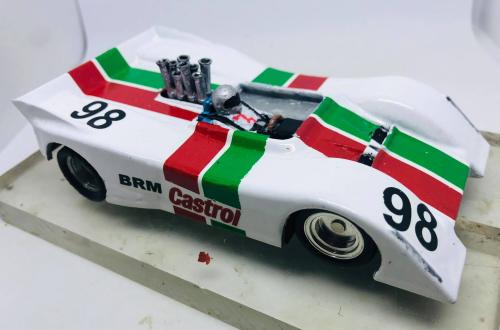
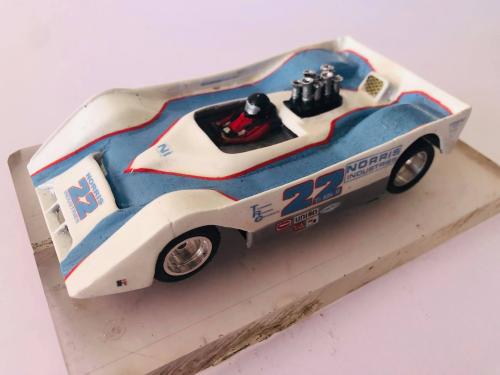
I have another friend in Italy (yes 2 I know - amazing huh? ) that lives on this process and produes wonderful cars and does a lot of great work. I have several of his bodies and as Tony said, they require a huge amount of work, which I have not been able to bring myself to do as yet. My impression is that the resin printers produce easier bodies to work with.
Nice thread btw.
PS not wanting to ';bash' in any way the printing fraternity - i have managed to do some reasonably finished work on cars with some reasonable amount of effort.
(This post was last modified: 16th-Aug-22, 05:46 AM by
Anthony B.)
![[+]](https://slotracer.online/community/images/bootbb/collapse_collapsed.png) •
•
Posts: 4,502
Threads: 147
Likes Received: 3,052 in 1,810 posts
Likes Given: 4,195
Joined: Apr 2019
Location Isle of Man
As you say, 3D printing is a great way to get a model pretty damn close then finishing it off if desired which isn't that far detached from making the same thing in other ways.
Life is like a box of Slot cars...


•
Posts: 121
Threads: 12
Likes Received: 97 in 58 posts
Likes Given: 95
Joined: Apr 2021
(15th-Aug-22, 08:20 AM)Gordon Steadman Wrote: I assume that manufacturers now use this method. Quickly printing a body the right shape then gives the opportunity to get a good finish on it and use it to produce a production mould.
I think an important thing to keep in mind with using 3D printing as I do and maybe Gordon would, is that assuming that the CAD model is good then we get very high standards of symmetry and accuracy in the reproduction but we lack fine finish.
I get over the fine finish up to a point by specifying certain areas to have a very fine layer height such as 0.05mm then to revert back to a more normal 0.1 or 0.2 mm layer step in less critical areas.
I work in composites and there are some 3D printers being trialled that can print the patterns for quite large leisure boat hulls that will have production moulds made from the patterns.
•
Posts: 4,502
Threads: 147
Likes Received: 3,052 in 1,810 posts
Likes Given: 4,195
Joined: Apr 2019
Location Isle of Man
(15th-Aug-22, 09:46 AM)Bazzer Wrote: (15th-Aug-22, 08:20 AM)Gordon Steadman Wrote: I assume that manufacturers now use this method. Quickly printing a body the right shape then gives the opportunity to get a good finish on it and use it to produce a production mould.
I think an important thing to keep in mind with using 3D printing as I do and maybe Gordon would, is that assuming that the CAD model is good then we get very high standards of symmetry and accuracy in the reproduction but we lack fine finish.
I get over the fine finish up to a point by specifying certain areas to have a very fine layer height such as 0.05mm then to revert back to a more normal 0.1 or 0.2 mm layer step in less critical areas.
I work in composites and there are some 3D printers being trialled that can print the patterns for quite large leisure boat hulls that will have production moulds made from the patterns.
Some CAD models are garbage, don't assume anything.
Resin printers don't work with varying layers.
3D is the quickest way to pre-production models and patterns.
Life is like a box of Slot cars...
•
Posts: 121
Threads: 12
Likes Received: 97 in 58 posts
Likes Given: 95
Joined: Apr 2021
(15th-Aug-22, 09:52 AM)Some CAD models are garbage, don\t assume anything. Wrote: I only work with CAD models that either me or my competition partner have created, the stuff we want to do is all original stuff.
I will post some really good links on creating 3D models from just 2D drawings later.
(This post was last modified: 15th-Aug-22, 12:24 PM by
Bazzer.)
Posts: 4,502
Threads: 147
Likes Received: 3,052 in 1,810 posts
Likes Given: 4,195
Joined: Apr 2019
Location Isle of Man
•
Posts: 789
Threads: 30
Likes Received: 1,382 in 619 posts
Likes Given: 482
Joined: Apr 2019
Location Auburn, WA, USA
(15th-Aug-22, 08:20 AM)Gordon Steadman Wrote: I assume that manufacturers now use this method. Quickly printing a body the right shape then gives the opportunity to get a good finish on it and use it to produce a production mould.
I'm pretty sure they use 3dp for prototyping only. Once they're happy with the model as far as the CAD work goes, then the injection mold is produced in the normal way, not by using any 3d printed thing as a master. Then it's injection molding from there.
Small production companies, like Area 71, or Joe Blow with his custom chassis/body garage business, might use 3dp as a production method, or even to produce a master for casting, but not any company the size of slot.it or larger.
printables.com/@MrFlippant
•
Posts: 1,246
Threads: 84
Likes Received: 1,035 in 519 posts
Likes Given: 244
Joined: Apr 2019
Location France
But how do they then produce the mould? It seems strange that they would have a 'perfectly' proportioned model available and then hand make another to mould from.
I say this from a position of total ignorance.
•
Posts: 4,502
Threads: 147
Likes Received: 3,052 in 1,810 posts
Likes Given: 4,195
Joined: Apr 2019
Location Isle of Man
(15th-Aug-22, 02:54 PM)Gordon Steadman Wrote: But how do they then produce the mould? It seems strange that they would have a 'perfectly' proportioned model available and then hand make another to mould from.
I say this from a position of total ignorance.
A mold tool maker would make the tooling as they have done for decades before 3D printing was even invented. CNC milling and good old fashioned toolmaking.
Life is like a box of Slot cars...
•
Posts: 221
Threads: 7
Likes Received: 247 in 122 posts
Likes Given: 19
Joined: Jun 2020
For mass production moulds are usually made from steel which is CNC machined or/or spark eroded. The video in the link explains the basics.
https://www.youtube.com/watch?v=seZqq1qxW30
Prior to CNC machining most moulds were made by using a pantograph. The pantograph followed the shape of a prototype model to cut out the steel mould. This needed a very skilled operator for the pantograph.
Cottage industry manufacturers either carve a master by hand (eg George Turner Models) which is used to make moulds for resin castings or print a 3D printed body that the customer has to sand and fill.
I have heard of people taking a mould from a roughish 3D printed body and casting a body in resin. The resin body is then tidied up and detailed to make a good quality master for a further mould which is used for the production bodies. This method is used because it is easier and faster to tidy up the basic resin casting than it would be to try to clean up the 3D print to a high standard.
In the 1/43 static model car world some of the cottage industry manufacturers who use whitemetal castings for their models commission a master in brass and make rubber moulds from the master which have to be vulcanised to withstand the whitemetal casting process. The moulds are remade regularly and over time it is not unknown for the brass master to break under the pressure of the vulcanising process but they can usually be returned to the person who made the prototype in the first place to be repaired
French company AMR run by the late Andre-Marie Ruf was regarded as one of the best producers of 1/43 white metal kits. AM Ruf carved his masters in wax and used the lost wax process familiar to jewellery makers to produce prototypes in silver which were then used to make rubber moulds.
Far more information than you needed but I hope it gives an insight into all the alternatives.
(This post was last modified: 15th-Aug-22, 04:02 PM by
autoavia.)
•



