

28th-Jun-23, 08:05 AM
Would agree with Chappyman here, PLA or PLA+/super/Tough is more than adequate for pods the key as stated above is design the pods for the process and material used.
Simple rules keep the flexing of vertical walls to a minimum, ensure sufficient wall thickness is used i.e. thicker than injection moulded pods and buttress the walls where possible.
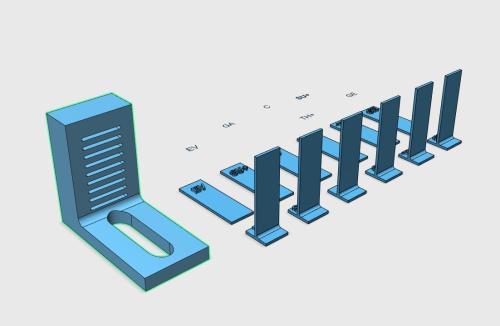
The other point to note is that PLA varies greatly from manufacturer to manufacturer, Ive had PLA that has a beautiful layer finish but is too rigid so will snap if flexed. When I have new manufacturers filament I make test wafers both horizontally and vertical and check to see how they flex and how good layer adhesion is using the slotted jig shown below. By placing the wafers in the lower jig slots then bending downwards to the base and moving up the slots until the wafer snaps or bends and does not recover. This testing also helps with dialling in the printer settings for nozzles temperatures and layer height.
Cheers
John
Simple rules keep the flexing of vertical walls to a minimum, ensure sufficient wall thickness is used i.e. thicker than injection moulded pods and buttress the walls where possible.
The other point to note is that PLA varies greatly from manufacturer to manufacturer, Ive had PLA that has a beautiful layer finish but is too rigid so will snap if flexed. When I have new manufacturers filament I make test wafers both horizontally and vertical and check to see how they flex and how good layer adhesion is using the slotted jig shown below. By placing the wafers in the lower jig slots then bending downwards to the base and moving up the slots until the wafer snaps or bends and does not recover. This testing also helps with dialling in the printer settings for nozzles temperatures and layer height.
Cheers
John
Mr Fit for Function.
![[+]](https://slotracer.online/community/images/bootbb/collapse_collapsed.png)