
La Habana
In the 1950s, Havana was one of the party capitals of the world, it was the Monte Carlo of the Caribbean. The capital of Cuba was awash with rich, fashionable and often famous Americans. Habana was what you might call a James Bond type of place; rich and exotic, full of casinos and nightclubs, of music, dancing, drinking and gambling.
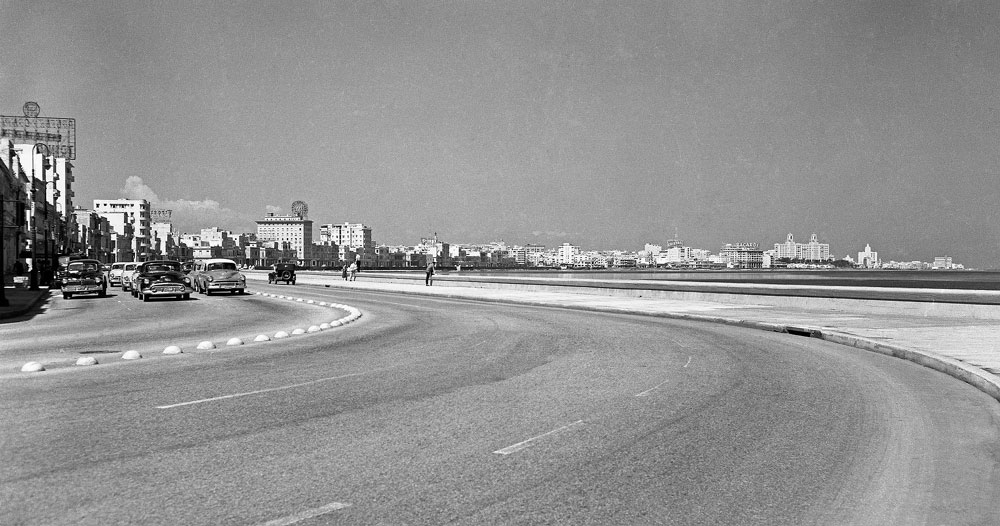
In 1957 & 1958 the Cuban Grands Prix took place against the backdrop of the beautiful seafront boulevard of Malecón Avenue. The wealthiest and most fashionable attended, amongst a crowd of some say 150,000. The 1957 race was a huge success. The race in 1958 was an amazing and dramatic reversal.
This is the story of two incredible races, featuring amazing drivers, a brilliant world champion, a revolutionary kidnapping, and a fateful crash. Buckle up.
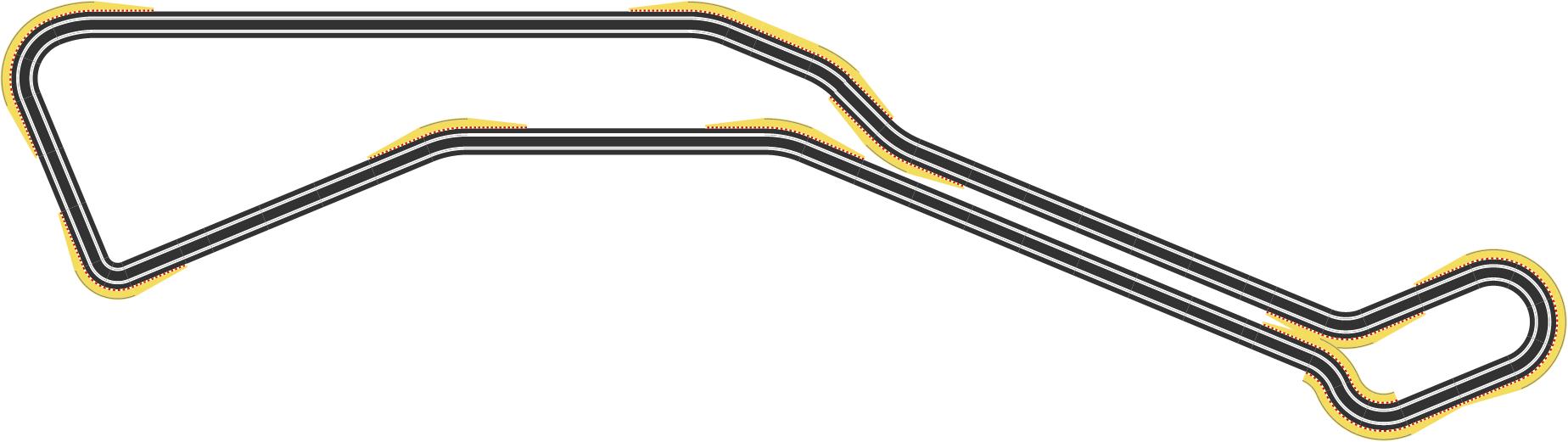
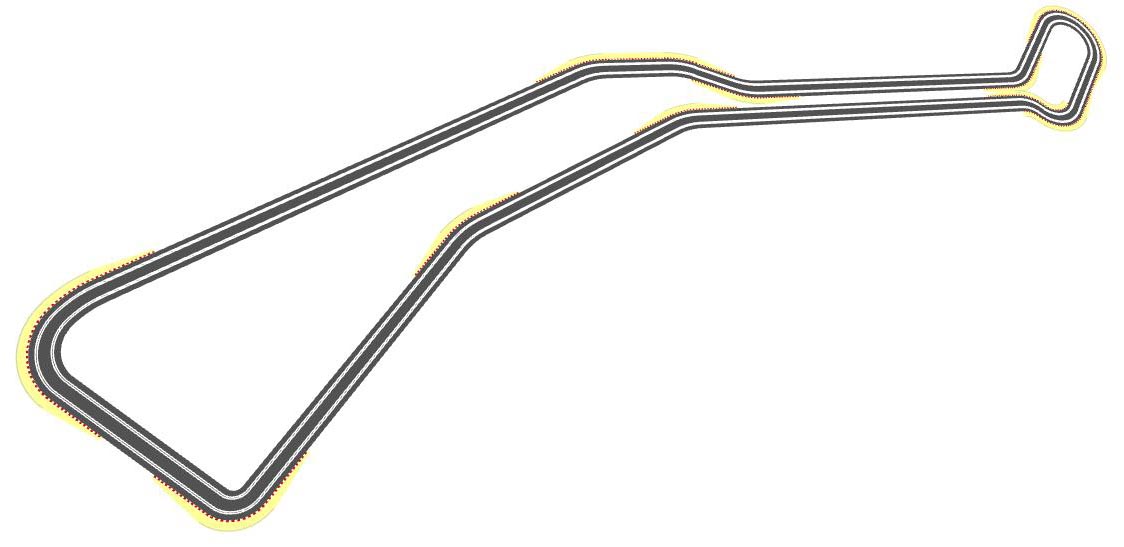
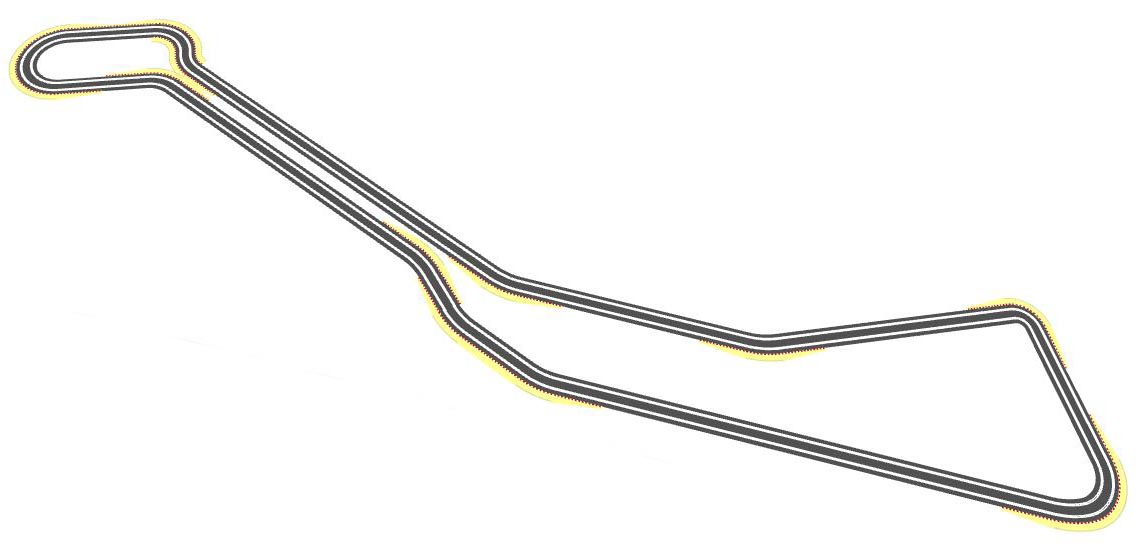
SCX-5084 El Malecon

| C8205 | S | x45 |
| C8202 | R1 | x2 |
| C8200 | 1/4S | x1 |
| C8235 | R4 | x6 |
| C8206 | R2 | x10 |
| C8207 | 1/2S | x3 |
1957
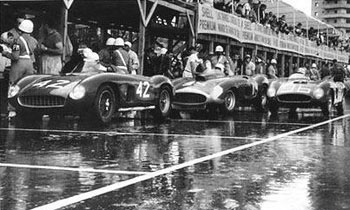
Despite not being a championship event, the Gran Premio de Cuba attracted some world class competitors in 1957. There was Stirling Moss, one of Britain's finest drivers, Phil Hill, future world champion, Alfonso de Portago the Spanish Marquis, Eugenio Castellotti, Harry Schell, and of course, the most famous driver of his day, and some would say the best of all time, Juan Manuel Fangio.
Fangio was a South American hero having won the world championship in 1951, 54, 55 and 56. He would also go on to win again in 1957, to cement his reputation as the best in the world.
These so called “knights of the Malecon” raced for 500km along the beautiful sea front of Habana, in front of a crowd of 150,000.
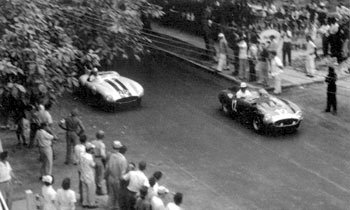
The 1957 Gran Premio de Cuba ended up as a duel between Fangio and De Portago. The Marquis led for much of the race in his Ferrari , but Fangio, in the Maserati began to catch him as the race wore on.
Fangio would eventually "crowd" De Portago, and challenge the Marquis in some close fought action until the climax.
Just a lap or two from the end of the race, De Portago's engine blew and his race was over. Fangio powered on to win the race, Carroll Shelby overtook the stricken Marquis to come second, but De Portago did at least manage to hold onto third place.





Marquis de Portago
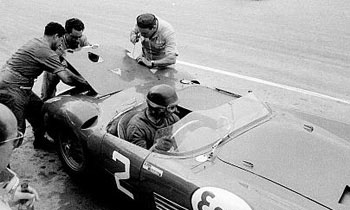
It would be an opportunity missed if we didn't say a few words about the Marquis de Portago at this point.
Alfonso Antonio Vicente Eduardo Angel Blas Francisco de Borja Cabeza de Vaca y Leighton marquis of Portago, best known as Alfonso de Portago, was a racing driver from Spain, born in London, educated in France and articulate in four languages. Portago was heir to one of the most respected titles in Spain and also a millionaire. Among his ancestors was an explorer, a Governor of Madrid, and a war hero.
He won a $500 bet at the age of 17 when he flew his plane beneath a bridge. He participated twice in the Grand National Steeplechase at Aintree as a gentleman jockey, and he was also a bobsleigh competitor at the 1956 Winter Olympic Games in Cortina d'Ampezzo, where he placed fourth in the two-man race. Portago also won a bronze medal in the two-man event at the 1957 FIBT World Championships in St. Moritz.
1958
The 1957 event had been a great success, but brutality by the President's men after the end of the race was a sign that all was not well. Unrest was growing in the country as Fidel Castro, Che Guevara and their revolutionary rebels planned the overthrow of President Batista and his corrupt regime.
The Gran Premio of 1958 was an unmitigated disaster, both as a race and as a showcase for Batista's Cuba. The world champion, Fangio, was kidnapped by Castro's rebels to draw attention to their cause. The race started without it's biggest star, but ended in disaster after only 15 minutes when Armando Garcia Cifuentes skidded on oil and ploughed into the crowd, killing seven people.
Less than one year later, Castro had deposed Batista as Cuba's leader. The party was over, the Americans left and Cuba turned to communism.
Death on The Malecon
Monday March 10, 1958 – from TIME
As the world's No. 1 road-racing driver, Juan Manuel Fangio is an old friend to danger. The 46-year-old Argentine has seen its blurred face in the swirling landscape of a hundred tracks, known its angry snarl whenever his sports car skidded through a tight turn. But one evening last week he stared at danger in a new form: the muzzle of a pistol.
Poking the weapon at him in the lobby of Havana's Hotel Lincoln was a tall young man in a leather jacket. "Fangio, you must come with me," he ordered. "I am a member of the 26th of July revolutionary movement." One of Fangio's friends picked up a paperweight and cocked his arm. The pistol moved alertly. "Stay still!" its owner said. "If you move, I'll shoot." Fangio went obediently to a waiting car and was whisked off.
Fidel Castro's rebels embarrassed the authorities, but the race went on. Next afternoon the cars were ready, the Malecon that curves along Havana's lovely coastline had been cleared. A crowd of 150,000 lined the broad boulevard.
On the Malecón, the danger more familiar to Fangio began to haunt his fellow racers. Britain's Stirling Moss took the lead in a Ferrari, Missourian Masten Gregory, driving another Ferrari, was second. By the end of five laps, all the drivers saw that almost every turn was slick with spilled oil; they knew that they were in for trouble.
Next time around, Cuba's Armando Garcia Cifuentes, 27, met trouble head on. His bright yellow and black Ferrari skidded out of a shallow turn and tore into the crowd. It spewed up at least 40 casualties, including seven dead. In its wake lay empty shoes; spectators had been knocked right out of them.
Just 15 minutes after it started, the race was called off. Stirling Moss, who held the lead, was declared winner.
After that, Fangio had no trouble talking his captors into turning him over to the Argentine embassy.
"Well," he philosophized, "this is one more adventure. If what the rebels did was in a good cause, then I, as an Argentine, accept it."
Satisfied that the oil slick was not rebel sabotage, the authorities placed all the blame for the accident on Driver Cifuentes, who was barely alive in a hospital. He was charged with manslaughter. No one found it worthwhile to criticize the "person or persons who" permitted the crowd to line the trackside, i.e., the National Sports Commission, headed by Brigadier General Roberto Fernandez Miranda, who is President Batista's brother-in-law.
Disaster At Cuban Grand Prix
Warning:- This film shows brief clips of the fatal accident.